
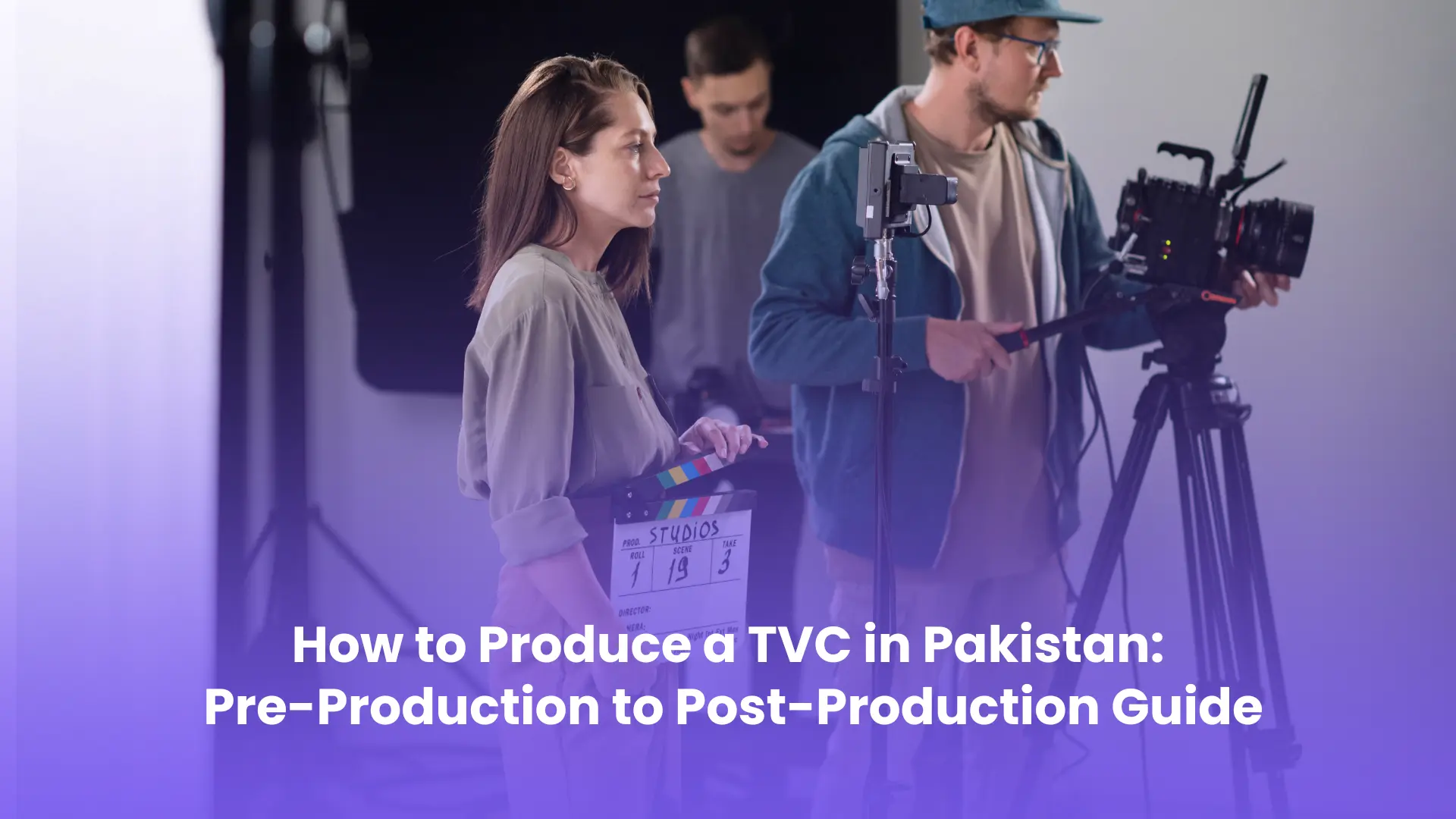
You still remember the Zalima Coca jingle, don't you?
That is not a coincidence. That is the result of a production process that most people never see: weeks of planning, a crew of 50-plus people, expensive cinema cameras, and a post-production suite where editors shave milliseconds off cuts until the pacing feels exactly right.
Thirty seconds on screen. Weeks of work behind it.
If your brand is thinking about producing a TVC in Pakistan, this guide is the honest version of what that journey looks like: the process, the costs, the city you should shoot in, and the questions you need to ask before you sign anything.
Is TV Still Worth It for Pakistani Brands?
Short answer: yes, and by a wider margin than most people expect.
Geo, ARY, Hum, and Express still reach tens of millions of households daily, including huge chunks of rural Pakistan that are nowhere near as active on digital platforms. One well-placed prime-time TVC can generate brand impressions at a scale that most digital campaigns need a very large budget to match.
There is also something television does that Instagram ads simply cannot replicate: it signals that your brand is real. When a consumer sees you advertising on a major national channel, that alone communicates scale and trustworthiness. For a newer brand trying to build credibility fast, that signal is genuinely worth paying for.
The smartest approach is to use both. Television for reach, digital for conversion. Brands that plan a TVC and a digital video commercial together, shot on the same day with the same cast and creative concept, stretch their production budget much further and show up consistently everywhere their audience is.
So What Is TVC Production, Exactly?
TVC production is the full process of taking a brand message from an idea to a broadcast-ready film that airs on television. It covers everything from scriptwriting, casting, and location scouting to the actual shoot, editing, colour grading, sound design, and final delivery to the channel in the correct technical format.
It is a different beast from a corporate video or a social media reel. Broadcast television has strict technical requirements for resolution, audio levels, and colour standards. None of this is negotiable. A file that does not meet a channel's delivery specs simply does not air.
The whole process runs in three stages. Here is what each one actually involves.
Stage One: Pre-Production
This is where most of the real decisions get made, and it usually takes two to three weeks for a standard TVC. What happens during this phase determines whether your shoot day runs smoothly or costs you double.
The Brief and the Script
Everything starts with a clear brief: your brand objective, target audience, key message, tone, runtime, and any non-negotiables like product shots or legal disclosures. From the brief, the production team develops a concept and then a script.
A script for a 30-second TVC is a very tight document. There is no room to ramble. Every line, every visual moment, and every second of silence is deliberate. Weak scripting at this stage is expensive. It shows up on set as confusion, and it shows up in post-production as footage that does not cut together properly.
Storyboarding
Once the script is confirmed, the director maps out every shot in a storyboard. Think of it as a visual blueprint for the shoot. Clients can see what the finished commercial will look like before a single crew member is hired. It also means everyone on set, from the director to the camera and lighting teams, knows exactly what they are there to capture.
Location Scouting
Finding the right location is not about picking somewhere that looks pretty. The production team is checking natural light angles at the specific time of day you plan to shoot. They are testing the generator power supply. They are listening for ambient noise that a microphone will pick up and ruin a take. They are figuring out how to get heavy camera equipment, lighting rigs, and a 40-person crew to a narrow old-city street in Lahore without blocking the neighbourhood for hours.
The location carries the mood of the commercial. A heritage haveli in Walled City Lahore shoots completely differently from a rooftop in Karachi's DHA. Both require a detailed technical recce before anyone commits to booking them.
Casting
The right face for a TVC is not always the most famous one. Sometimes the brief calls for a celebrity, a beauty ambassador, a retired sports icon, or a vocalist carrying the campaign anthem. Other times, fresh talent connects with the audience more genuinely. Good casting is about matching the person to the message, not just filling the frame.
Art Direction and Set Design
Every object in the frame is a choice. The colour of the wall, the texture of the tablecloth, the specific cup sitting on the counter: none of it is accidental in a well-produced TVC. Art direction is about building an environment that feels true to the brand, not a generic studio setup that immediately reads as "an advertisement." When the set design is done right, the audience does not notice it. They just feel it.
Stage Two: The Shoot
Shoot days are long, physical, and expensive. A typical TVC films over one to three days, and those days start before sunrise and rarely end before midnight.
Camera Equipment
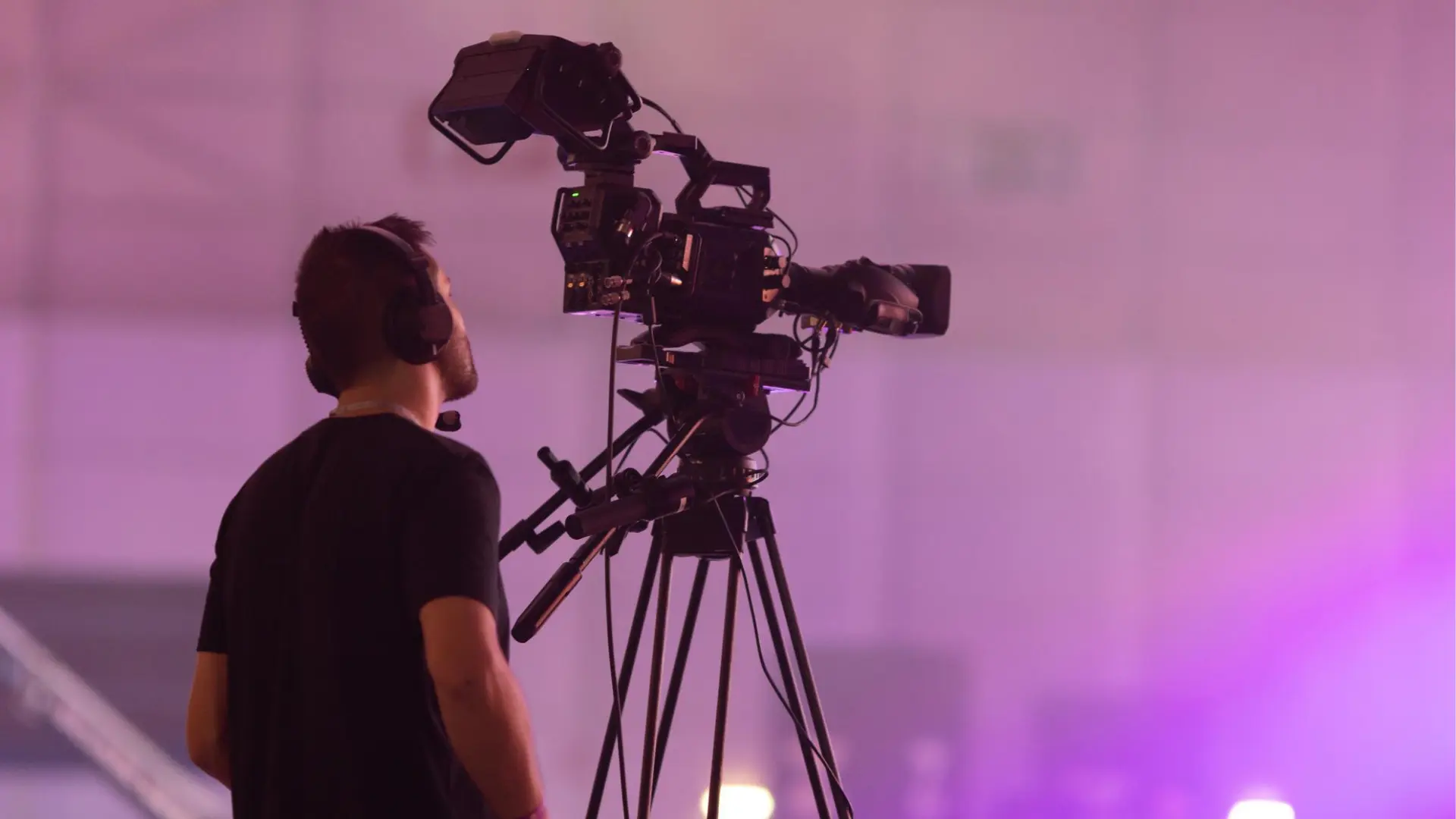
The camera system matters, and it matters more than most clients expect. Professional TVC production in Pakistan uses cinema-grade systems, with ARRI Alexa and RED cameras among the most common. These produce footage with enough dynamic range and resolution to survive colour grading and broadcast compression and still look sharp on a large screen. That is the difference between footage that looks like a film and footage that looks like a phone video.
What a Shoot Day Actually Looks Like
Forty to eighty people on set. A director managing the creative vision, a camera operator executing it, a lighting team adjusting constantly as the sun moves, a sound engineer monitoring every take, an art director maintaining the set between shots, a production manager keeping the whole thing on schedule, talent in hair and makeup, a client representative approving takes, and production assistants running between all of them.
That is the reality of a high-end TVC shoot in Lahore or Karachi. When the logistics are handled well, you barely notice the machine working. When they are not, you notice it in the edit: missing shots, rushed takes, and footage that does not match across the day because the light changed and nobody adjusted.
Pakistan's summer climate adds another layer. Shooting outdoors in Lahore in June means dealing with 42-degree heat that affects equipment, talent, and crew concentration. Shooting on a Karachi street means navigating unpredictable traffic and crowd management. Experienced production teams have dealt with both enough times to plan around them.
Stage Three: Post-Production
Raw footage from the shoot is exactly that: raw. Post-production is where it becomes the polished 30 seconds your audience sees on screen.
The Edit
Editing a TVC is not just cutting clips together. It is about finding the rhythm of the commercial, the pace at which the story moves, where the music swells, and how long a product shot holds before the cut. A skilled editor working in a proper post-production suite in Pakistan will go through multiple rounds of cuts before the timing feels right. The client usually sees three to five versions before picture lock.
Colour Grading
Colour grading is probably the most underestimated part of the whole process. It is not just making the footage look warm or bright. It is giving the commercial a visual character that belongs to the brand. A skincare TVC has a completely different palette from a banking commercial. A food brand's colour treatment looks nothing like a telecom campaign. This work happens in a dedicated grading suite, and the difference between a graded and an ungraded TVC is visible immediately.
Sound Design, Music, and Voice-Over
Audio is half the experience of any television commercial. Background music, either composed specifically for the ad or licensed for broadcast use, sets the emotional tone from the first second. Sound effects add texture. Voice-over narration, recorded in Urdu, English, or regional languages depending on the audience, delivers the message directly.
One thing that trips up a lot of smaller productions is music licensing. Any music used in a TVC must be properly licensed for broadcast use. Unlicensed music creates legal complications with the broadcaster and the rights holder. A professional production house handles this as part of the process.
PEMRA Compliance and Channel Delivery
Before a TVC airs on any Pakistani television channel, it has to meet PEMRA's content regulations and each channel's specific technical delivery requirements: video codec, audio levels, aspect ratio, and file format. Getting this wrong means the file comes back and the air date gets pushed. An experienced production house handles delivery logistics directly and makes sure the right file reaches the right channel in the right format.
TVC vs DVC: Worth Understanding the Difference
A TVC is built for broadcast television. A digital video commercial, or DVC, is built for platforms like YouTube, Instagram, and Facebook. Both share most of the same production process, but they differ in technical specifications, runtime formats, and placement.
For most brands with a reasonable production budget, shooting both from the same session is the most efficient decision you can make. The core footage is captured once. Post-production then produces different edits, crops, and formats for each platform. One shoot day, two campaigns. The investment goes considerably further.
What Does TVC Production Cost in Pakistan?
Pricing varies a lot depending on the scope of the project. Here is a realistic breakdown:
| Production Level | Cost Range (PKR) | What Is Included |
|---|---|---|
| Entry-Level | 5,00,000 - 8,00,000 | Single location, small cast, standard post-production |
| Mid-Range | 8,00,000 - 25,00,000 | Multiple locations, larger cast, full post-production pipeline |
| High-End | 25,00,000 - 1,00,00,000+ | Celebrity talent, elaborate sets, VFX, multi-day shoots |
These figures cover production only. Media buying, what you pay the television channel to actually air the commercial, is a completely separate cost typically managed through an advertising agency or a media buying specialist.
Always ask for an itemised quote that breaks down pre-production, production, and post-production separately. It helps you see where the money is going and where you can adjust the scope if the budget needs trimming.
Karachi, Lahore, or Islamabad: Which City Should You Shoot In?
Each city brings something genuinely different to a TVC production.
Karachi is high-energy, urban, and coastal. The crew culture there has been shaped by decades of advertising production for major national brands. It suits brands that want a modern, fast-paced, cosmopolitan feel.
Lahore offers cultural depth that is very difficult to recreate anywhere else. Mughal-era architecture, bazaar textures, and the warm golden-hour light of the Punjab plains give Lahore-shot TVCs an emotional quality that stands out. It is the natural fit for campaigns that need to feel rooted in Pakistani identity.
Islamabad is the right base for institutional, government, and corporate clients. Formal visual standards, proximity to federal stakeholders, and familiarity with capital-region approval processes make Islamabad-based production houses the practical choice for that type of work.
How to Brief a Production House Properly
The quality of the brief you walk in with directly affects the quality of the creative concept you get back. Do not underestimate this.
A useful brief covers your communication objective, the audience you are trying to reach, the single most important message you want them to take away, the tone you want the commercial to carry, any mandatory elements, which channels it will air on, your desired runtime, and your production budget range.
Before you sign a production agreement, ask to see TVCs that have actually aired on Pakistani television, not just a production showreel. Confirm that you will receive full copyright ownership of the finished commercial. Ask how many revision rounds are included before additional charges kick in. Make sure all music is licensed for broadcast use. And confirm that the final delivery format meets the technical specs of the specific channels where your commercial will run.
FAQs
How long does the whole process take?
Four to eight weeks, start to finish. Pre-production takes two to three weeks, the shoot runs one to three days, and post-production takes another two to three weeks, depending on revision rounds and complexity.
Why do professional TVCs need cinema cameras?
Broadcast television has resolution and dynamic range requirements that consumer cameras cannot consistently meet. Cinema-grade systems like ARRI and RED produce footage that survives colour grading and broadcast compression without losing quality on a large screen.
Can I produce a TVC and a digital video commercial from one shoot?
Yes, and for most brands this is the smartest use of a production budget. You capture the core footage once and produce different cuts and formats in post-production to serve both broadcast and digital platforms.
What is PEMRA, and why does it matter for my TVC?
PEMRA is Pakistan's broadcast media regulator. It sets both content standards and technical delivery requirements for anything that airs on a licensed television channel. Your TVC must meet these standards before the broadcaster accepts the file. A professional production house handles PEMRA compliance compliance as part of the delivery process.
What is the biggest mistake brands make when producing a TVC in Pakistan?
Skipping pre-production. Brands that arrive on shoot day without a locked script, a confirmed storyboard, or a properly scouted location spend twice what they should and get half of what they expected.
One Last Thing
The TVCs that stick, the ones you still hum years later, were not accidents. They came from a production process where every phase was taken seriously: a brief that was clear, a script that was tight, a crew that knew what they were doing, and a post-production team that polished the footage until it felt inevitable.
That level of output is available in Pakistan. The talent is here. The equipment is here. The crew culture in Karachi and Lahore has been built over decades of serious advertising production work.
What it requires from you is choosing the right partner and giving them the right brief.
The rest, when done properly, takes care of itself.