
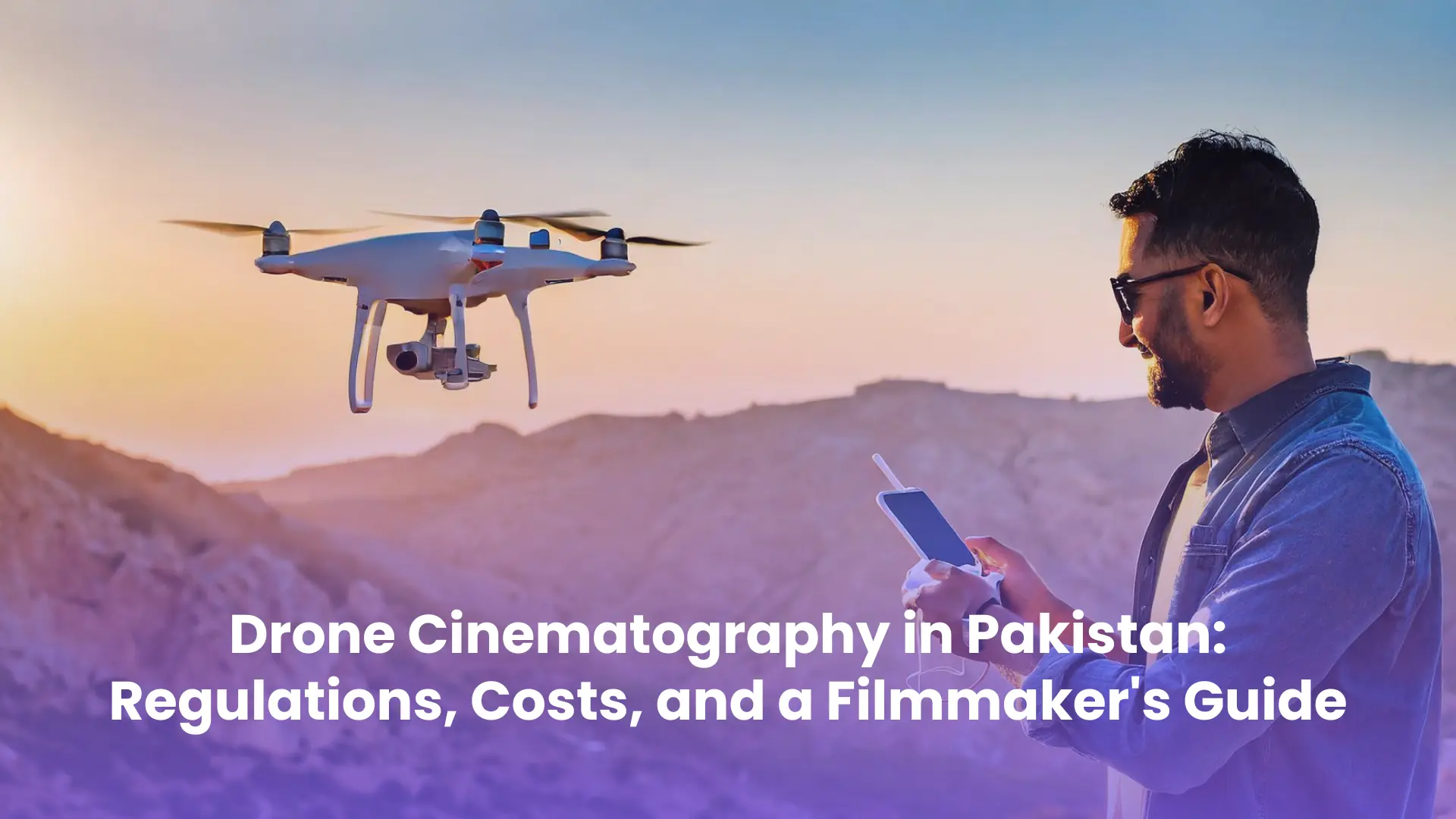
Pakistan is one of the most visually untapped countries in Asia. From the rugged peaks of the Karakoram to the Mughal-era skylines of Lahore, the country offers production value that most international locations simply cannot match, and aerial cinematography unlocks all of it.
But here is what most people do not figure out until it is too late: Pakistan's airspace is tightly controlled. Flying a drone without the right paperwork does not just risk a fine. It can mean confiscated equipment, halted productions, and legal detention under security acts.
This guide cuts through the confusion. Whether you are a Pakistani filmmaker, a corporate marketing team, or a foreign production house scouting locations, here is exactly what you need to know before a single drone leaves the ground.
Who Regulates Drone Flights in Pakistan?
The Civil Aviation Authority of Pakistan, specifically the Pakistan Civil Aviation Authority (PCAA), governs all unmanned aerial operations in the country. Under the Civil Unmanned Aircraft Rules, every commercial drone operator must comply with a tiered classification system based on aircraft weight:
Class I(under 250g): Minimal restrictions. Maximum altitude of 200 feet. Suitable for casual content, not professional commercial work.Class II(250g to 2kg): The standard bracket for professional commercial operators and covers most DJI cinema-grade drones.Class IIItoClass V(above 2kg): Heavy cinema rigs that require a Remote Pilot Operator License (RPOL) and a Certificate of Airworthiness (CoA) issued directly by the PCAA.
All commercial drones must be registered with the PCAA within 15 days of purchase or import. The universal altitude ceiling is 400 feet above ground level, and Visual Line of Sight (VLOS) must be maintained at all times. Individual operators cannot register more than three units per year.
One more layer matters if your footage is destined for television or mainstream digital platforms: it falls under the broadcast jurisdiction of PEMRA. Your production partner should hold active, clean PEMRA media credentials before the content goes public.
Where You Cannot Fly: No-Fly Zones Across Pakistan
Pakistan enforces strict no-fly zones for national security reasons, and ignorance of a restricted zone is not a legal defense if your aircraft gets intercepted or jammed. Here is how it breaks down across the three major production markets:
Islamabad
Islamabad is the most restricted airspace in the country. The Red Zone covering Parliament, the Supreme Court, the Prime Minister's residence, and the Diplomatic Enclave is under permanent military radar coverage. Even the Margalla Hills trail areas require multi-agency clearance before any aerial work begins.
Lahore
Lahore offers spectacular heritage architecture but sits in close proximity to international border zones. Military cantonments, high-security government compounds, and sensitive cultural sites like Lahore Fort and the Badshahi Mosque area require local administrative NOCs to reduce the risk of signal interception or field intervention.
Karachi
Karachi presents a layered airspace challenge. Naval installations, active commercial ports, and the approach paths of Jinnah International Airport make coastal operations along Clifton and Sea View highly technical. Detailed route mapping and coordination with the Civil Aviation Authority are non-negotiable.
What Does Drone Cinematography Actually Cost in Pakistan?
Pricing varies based on location risk tier, permit complexity, and equipment. The table below reflects current commercial market rates during peak production season from October to March:
| Tier | Equipment | Daily Rate (PKR) | Best For |
|---|---|---|---|
| Tier 1 Indie | Lightweight consumer drones | PKR 25,000 to 45,000 | Social content, digital campaigns |
| Tier 2 Commercial | Professional cinematic drones | PKR 55,000 to 95,000 | Corporate videos, brand campaigns |
| Tier 3 Cinema | Heavy-lift dual-operator rigs | PKR 130,000 to 250,000+ | TVCs, feature films, international media |
These rates typically cover the pilot's fee, standard battery cycles from four to six per day, and basic on-site data offloading. Travel, accommodation, and government permit processing fees are billed separately. Budget an additional PKR 15,000 to 40,000 for permit workflows in restricted locations like Islamabad or heritage zones in Lahore.
How to Get a Drone Permit in Pakistan: Step by Step
Permit timelines catch most productions off guard. Start this process at least 21 to 30 days before your shoot date, not the week before.
Step 1: PCAA Flight Application
Submit a formal flight request to the PCAA's Unmanned Aircraft Systems division. Your application should include the exact GPS coordinates of your launch points, copies of pilot CNIC documentation, and the serial numbers of all equipment being deployed.
Step 2: Ministry of Interior Security NOC
For high-profile or sensitive locations, the PCAA routes your application to the Ministry of Interior for security vetting. This step is mandatory for foreign production crews and international media organizations operating anywhere in Pakistan.
Step 3: Local District and Police Intimation
Once your official No Objection Certificate (NOC) is issued, take a copy to the local Deputy Commissioner office and the relevant police station in your target district. This single step helps prevent on-site interventions from local officials who may not be aware of your clearance.
Frequently Asked Questions
Can foreign production teams legally fly drones in Pakistan?
Yes, with the right paperwork. Foreign nationals need a pre-approved security clearance certificate from the Ministry of Interior for any professional or commercial-grade equipment. Consumer drones under 250 grams can be declared at customs for personal travel use, but commercial production requires full PCAA registration.
What are the penalties for unauthorized drone flights?
Immediate equipment seizure, heavy financial fines, and potential legal detention under state security legislation. The risk is not theoretical; enforcement is active, particularly in Islamabad, Lahore cantonment areas, and Karachi's coastal zones.
Does weather affect drone operations and costs in Pakistan?
Significantly. The optimal production window runs from October to March with clear skies, manageable winds, and consistent light. Between May and August, temperatures above 40 degrees Celsius in Lahore and Karachi cause battery degradation and component overheating, which reduces safe flight time per day and increases per-shot costs.
How far in advance should a corporate client book aerial production?
For standard shoots in open locations, two weeks is workable. For projects involving restricted airspaces in Islamabad, heritage corridors in Lahore, or coastal zones in Karachi, allow four to six weeks minimum to complete all government clearances before the shoot date.
What drone models are typically used for corporate cinematography in Pakistan?
Most professional production houses deploy DJI Mavic 3 Cine or DJI Inspire 2 rigs for Tier 2 commercial work. Larger cinema productions use custom heavy-lift platforms capable of carrying full-size cinema cameras.
What to Expect When You Work With a Professional Aerial Production House
Aerial cinematography in Pakistan is not just a technical execution. It is a full-cycle production management challenge. The difference between a smooth shoot and a confiscated drone comes down to three things: legal preparation, certified pilots, and creative experience.
A professional production partner handles PCAA registration and permit applications, Ministry of Interior security clearances, Local DC and police coordination, Certified, licensed pilots with commercial shoot histories, Equipment calibrated for regional climate conditions, Broadcast-ready footage optimized for your distribution platform
Ready to Plan Your Aerial Production in Pakistan?
At Inclivo, we manage the complete aerial production lifecycle, from securing government permissions across Lahore, Karachi, and Islamabad to deploying certified pilots on high-end cinematic rigs. We work exclusively with corporate brands, commercial advertisers, documentary crews, and international media organizations.
No guesswork. No compliance risk. Just broadcast-ready aerial footage that works.
Get in Touch With Inclivo
Information in this guide reflects PCAA regulations and market conditions as of early 2025. Regulatory frameworks are subject to change, so verify current requirements with the PCAA directly before production.